Hi Friendos,
Today I have cooperatives on my mind. I’ll bet you participate in the cooperative economy even if you don’t know it!
- Have you ever had medical treatment in a hospital? Visited someone in a long-term care facility? About one-third of medical laundry in the U.S. is cleaned by laundry cooperatives that are collectively owned by the hospitals they serve. I learned that in 2019 when I worked on a lawsuit involving the bankruptcy of a for-profit laundry company. Bedsheets, the curtain dividers between beds, scrubs, gowns…in their huge, capital-intensive facilities, these laundries take the dirtiest laundry and make it the cleanest.
- Do you have an account at Vanguard or own shares in a Vanguard mutual fund or ETF? If you do, you are a member of a financial co-op! Once upon a time all mutual funds in the U.S. were organized as mutual corporations; today Vanguard is the only large one remaining. I learned that in 2003 when I analyzed 8 years of mutual fund fee data from all the mutual fund filings at the Securities and Exchange Commission.
- Ever bought a jar of Frontier spices at Whole Foods or another grocery store? They’re a co‑op. Also, Ocean Spray (cranberry juice), True Value Hardware, Ace Hardware, Cabot Creamery, the Associated Press…all cooperatives.
And for my NYC friendos, you know that housing co-ops comprise a huge proportion of real estate in the city. Study agriculture and electricity in the U.S. and you’ll run into a lot of cooperatives.
I majored in economics in college with a focus on finance. In business school, finance was one of my areas of specialization. In those six years of formal education, I recall zero instances of a professor saying the word “cooperative” despite this model’s significance in many U.S. industries and how it can elegantly address certain economic problems. Taking an example from above: hospitals have daily needs for fresh linens, but don’t want to give up precious floor space inside the hospital to clean laundry – they want to use their physical space to treat patients. They do want to enjoy the lower per-piece cost achieved when cleaning great quantities of laundry at scale, but their own volume of laundry does not justify purchasing that type of large, costly equipment. Solution: band together with other hospitals to operate a facility at cost, and boom, you’ve got yourself a laundry cooperative.
A couple decades ago, I got concerned about toxic ingredients in my household and personal care products. The U.S. regulatory approach mostly allows companies to use whatever ingredients/pesticides they want, and only restrict or prohibit things after they are proven to cause harm, putting a huge burden on individuals to practice self-defense. It is inefficient and unrealistic for all of us to develop the required expertise. We all want household products that are safe. We all want our food to be free from toxins…and also delicious!
One solution is a cooperative grocery store where the buyers act as agents for the members. Financial stability is critical, but profits are not. What matters is bringing high quality (non-poisonous) items to the community. Vendors cannot purchase shelf placement, like in corporate grocery stores, and product selection is based on what people in the community want, not what corporate HQ decides the people are going to get.
I spent part of 2018 working as the CFO of the Park Slope Food Coop, which has the highest sales per square foot and highest inventory turnover of any grocery store in the country. People start shopping there because the food is quality and the prices are good. They stay for the community. In my time there, I gained an understanding of how a food coop can provide a stable customer base to quality providers, like the upstate farmer who started his organic cattle business because he had a purchase commitment from the food coop. The cooperative model allows for decision making based on factors that include financial viability, but also based on what members want and need. In other words, some of the most interesting and financially significant characteristics of the enterprise do not directly appear on the financial statements – if I’m being generous, I could say that is why my professors never put cooperatives on a syllabus. Maybe it was lack of awareness, maybe it was ideological or philosophical. Probably a bit of all of the above.
Right now, my neighborhood food coop needs help. The Windsor Terrace Food Coop lost a core group of active members during the pandemic and is slowly building back, but lacks a financial bridge to get us there. I am part of the neighborhood outreach team to bring more shoppers in the door — we don’t need that many more to reach steady state! But outreach takes time and we need to survive this week, and next week, and next month. Our wonderful farmers and vendors deserve full payment on time, as do our super talented store managers.
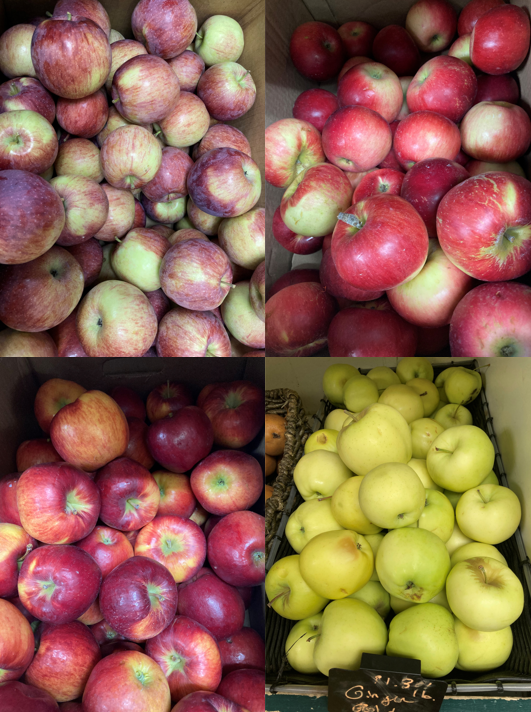
This beautiful little store has been bringing good food at good prices to central Brooklyn for more than a decade and I think we need this NICE place to survive and serve the community for decades more. We are the only place with fresh baked bread in this area! The apples! The delicious cheddar cheese! I could go on!
If you can help with a $5, $15, or $25 donation, it would make a huge difference. I cannot overemphasize this: a 2-figure donation is meaningful to our small but mighty food coop! Here’s the website, the donate button is up top (on the right side if you’re on a computer): https://windsorterracefoodcoop.com/
Next week, I promise I will get back to some more straightforwardly personal finance topics!

in cooperation,
-Stephanie
 Frequently Taxed Questions